Landfill Compactor Operational Scenarios | Heavy-Duty Sanitation Equipment for Landfill Operations and Efficient Solid Waste Disposal
The Core Operational Value of Landfill Compactors in Solid Waste Landfills
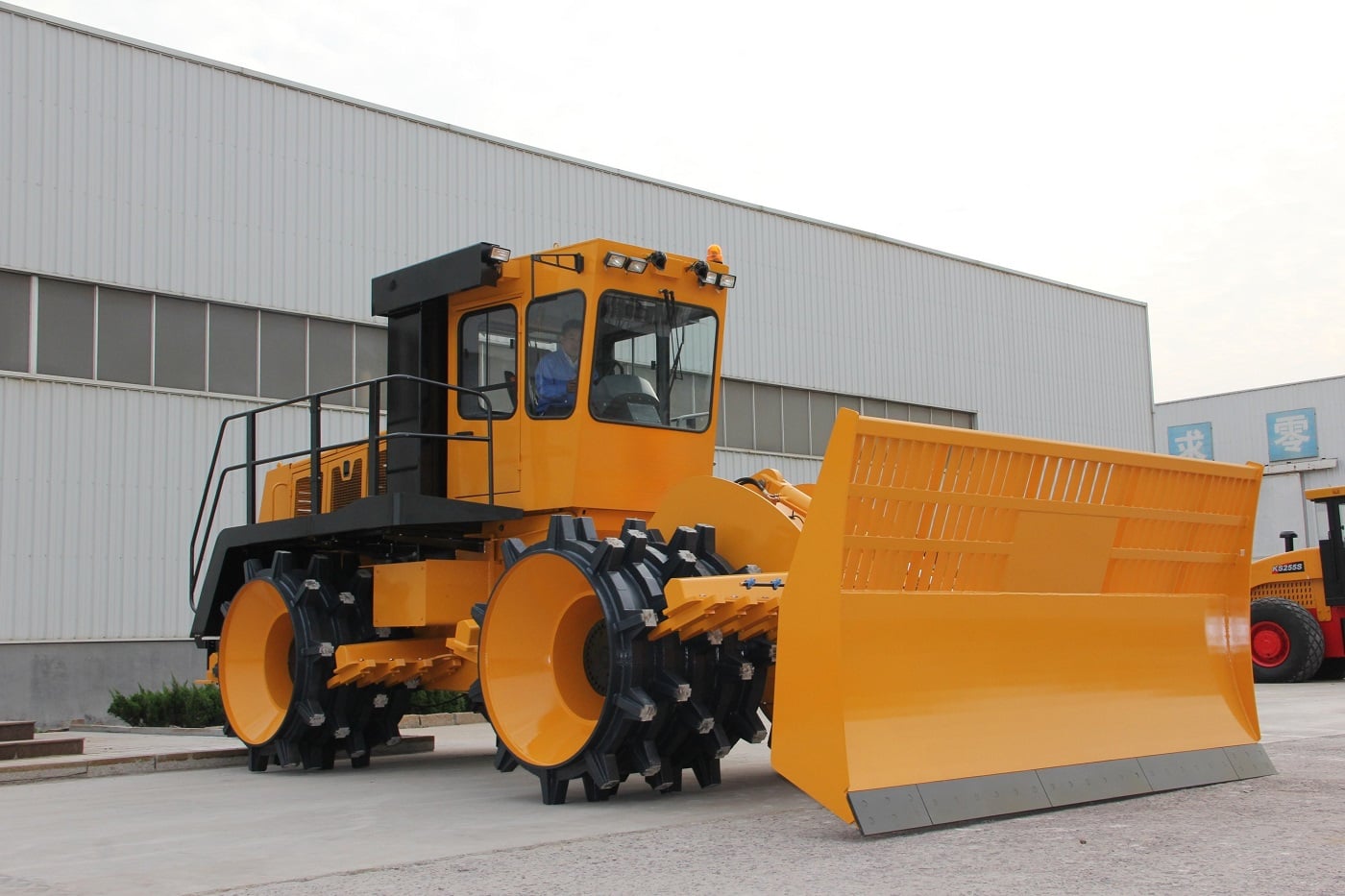
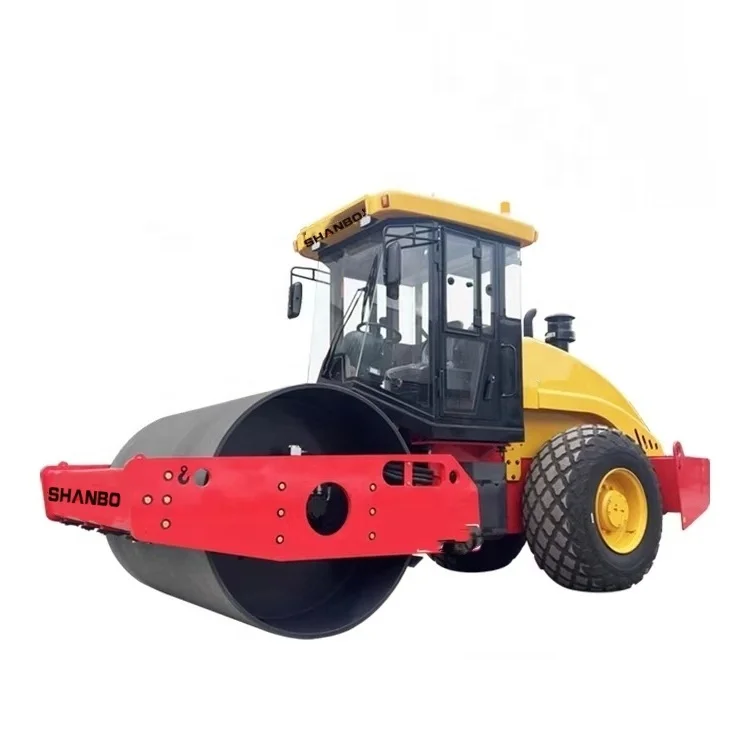
In the daily operation of municipal solid waste (MSW) and industrial solid waste landfills, landfill compactors serve as indispensable, heavy-duty sanitation equipment. Unlike standard road rollers, landfill compactors are specifically engineered for the unique challenges of waste management—handling loose, heterogeneous, and slippery materials. Equipped with specialized compaction wheels featuring crushing teeth and a front-mounted blade, these machines perform a comprehensive range of tasks: spreading waste, crushing materials, compacting waste in layers, and leveling the surface. They are essential tools for reducing the volume of solid waste and maximizing landfill capacity.
Landfill capacity is a critical resource for sanitation projects. Uncompacted waste has high porosity and occupies excessive space. Through continuous, intensive compaction, landfill compactors densify loose municipal waste, sludge, and general industrial solid waste. This significantly reduces waste volume, extends the operational lifespan of the landfill, and lowers the land acquisition and construction costs associated with developing new landfill sites—ultimately delivering long-term economic benefits for municipal sanitation departments and environmental engineering firms.
Operational Workflow and Equipment Advantages in Landfill Scenarios
Standard landfill operations follow a layered disposal process. Once waste transport vehicles unload their cargo, the landfill compactor uses its front-mounted blade to spread the waste evenly across the designated area, ensuring a controlled layer thickness. Subsequently, the compaction wheels—outfitted with wear-resistant crushing teeth—repeatedly traverse the waste. This action crushes items such as plastic bags, textiles, and wooden debris, preventing the formation of voids (bridging) and ensuring uniform compaction. Once the waste has been compacted to the required density across multiple layers, the surface is covered with soil, completing a seamless and highly efficient operational cycle.
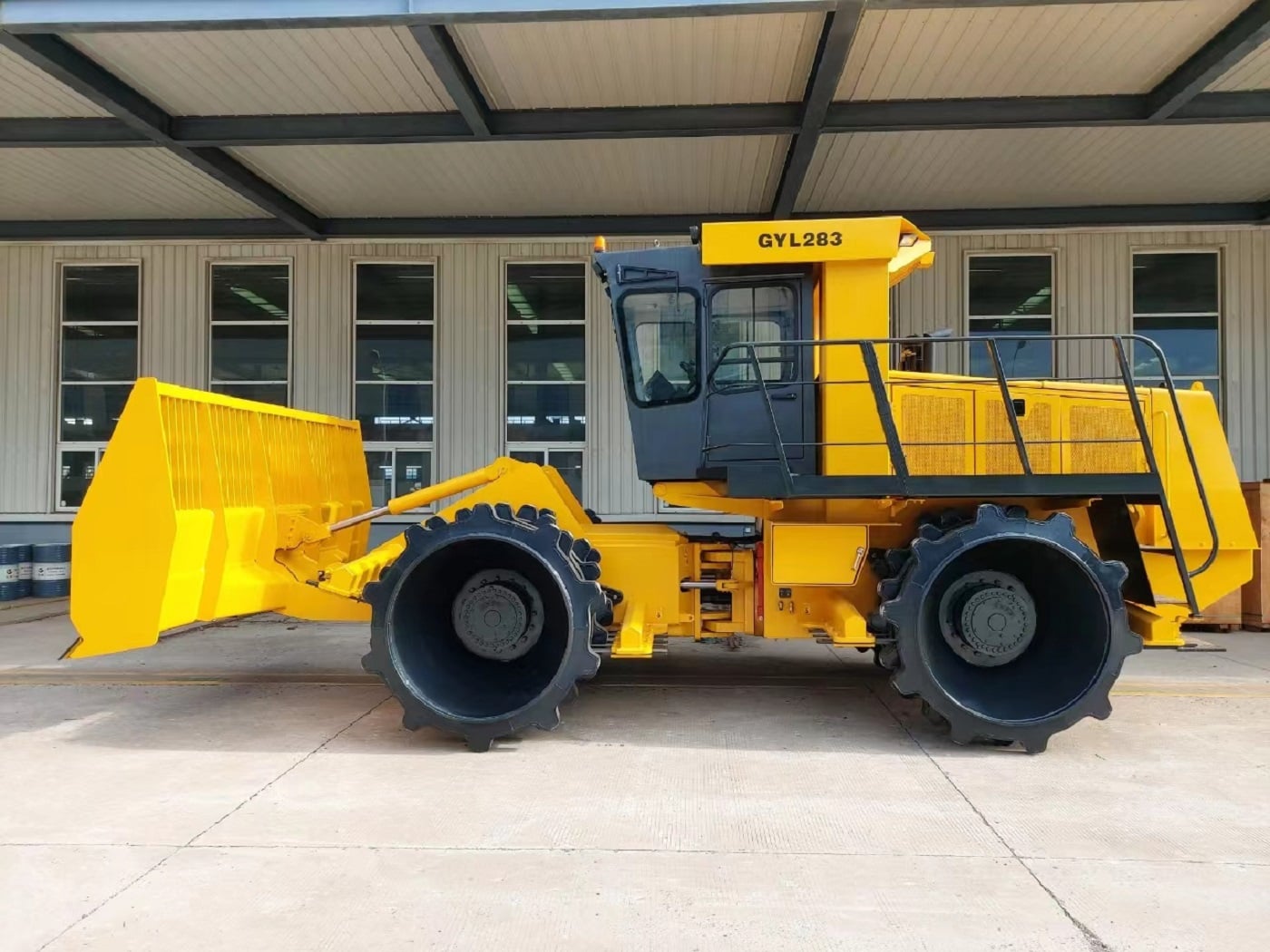
The machine features a heavy-duty reinforced frame, a high-torque drive system, and corrosion-resistant, wear-resistant wheel teeth—all designed to withstand the harsh conditions of landfills, characterized by high corrosivity, heavy dust, and fluctuating ground-bearing capacity. The enclosed, vibration-damped cab offers a panoramic view, allowing operators to clearly monitor the surrounding work environment. This ensures both stability and safety during long, continuous shifts, meeting the demands of high-intensity, all-weather solid waste disposal operations.
Versatile Adaptation for Diverse Solid Waste Disposal Projects
Reliable landfill compactors are not limited to municipal solid waste (MSW) sanitary landfills; they are also well-suited for rural waste disposal sites, general industrial solid waste landfills, and sludge disposal areas. Models of varying tonnages are available to match specific project scales: smaller units offer flexible operation for small-to-medium-sized sites, while high-tonnage, heavy-duty compactors are designed for large-scale municipal landfills, delivering high-density compaction.
As environmental regulations continue to tighten, the standardized disposal of solid waste has become a mandatory requirement for environmental projects. High-performance landfill compactors help facilities adhere to sanitary landfill standards by minimizing leachate generation and suppressing the spread of dust and odors. These machines serve as essential hardware infrastructure, enabling projects to maintain compliance with environmental regulations.
Selection Criteria: Matching Compaction Equipment to Site Conditions
When purchasing a landfill compactor, clients should evaluate their specific operational requirements—factoring in daily waste volume, the total area of the landfill site, the types of waste handled, and ground/foundation conditions. It is advisable to prioritize models with wear-resistant wheel teeth, ample power reserves, and ease of maintenance; this reduces downtime and ensures the continuity of landfill operations. Professional heavy machinery manufacturers can provide customized models and site-specific operational solutions, offering a one-stop approach to addressing solid waste compaction challenges.
As the domestic industry for the harmless treatment of solid waste continues to develop, the technology behind landfill compaction equipment is undergoing constant iteration and upgrading. Energy-efficient power systems and intelligent monitoring modules are increasingly being integrated into new models, further enhancing operational efficiency and reducing fuel consumption—ultimately providing the sanitation and solid waste management sector with more efficient and cost-effective heavy-duty equipment solutions.

 Hot News
-
Handling Solutions for Granite Curbstones: On-Site Application of Portable Vacuum Lifters
2026-11-07
-
Landfill Compactor Operational Scenarios | Heavy-Duty Sanitation Equipment for Landfill Operations and Efficient Solid Waste Disposal
2026-11-07
-
22-Ton Medium-Sized Excavator: A Powerful Machine for Global Infrastructure Projects
2026-11-07
-
Heavy-Duty Construction Bulldozer | Reliable, High-Performance Tracked Earthmoving Equipment – Your One-Stop Solution
2026-11-07
-
Heavy-Duty Compaction Equipment | High-Quality Road Rollers: Selecting Machinery for Road Construction
2026-11-05
-
Applications of Different Bulldozer Models | Operating Conditions for SD16, SD22, and SD32 Bulldozers
2026-11-05