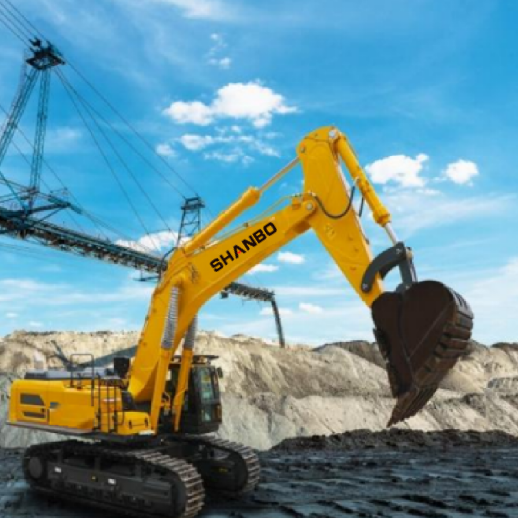
An In-depth Look at the SH380-9 Excavator: Operational Advantages and Key Specifications of a 38-Ton Class Crawler Excavator
In large-scale earthmoving, mining overburden removal, and infrastructure construction, 38-ton class crawler excavators serve as a vital, versatile link between medium and heavy-duty machinery. Through a detailed, on-site visual analysis, this overview examines the exterior design, operational strengths, and core specifications of the SH380-9 excavator—providing construction professionals with a clear, practical basis for equipment selection.
1. Positioning and Application of 38-Ton Class Crawler Excavators
Occupying the space between medium and large-scale equipment, 38-ton excavators offer a powerful combination of digging force and an extensive working radius, while maintaining a high degree of mobility for site-to-site relocation. Compared to 22-ton models, 38-ton units provide significant advantages in bucket capacity, overall machine stability, and continuous operational efficiency—making them better suited for long-duration, high-intensity earthmoving and loading tasks.
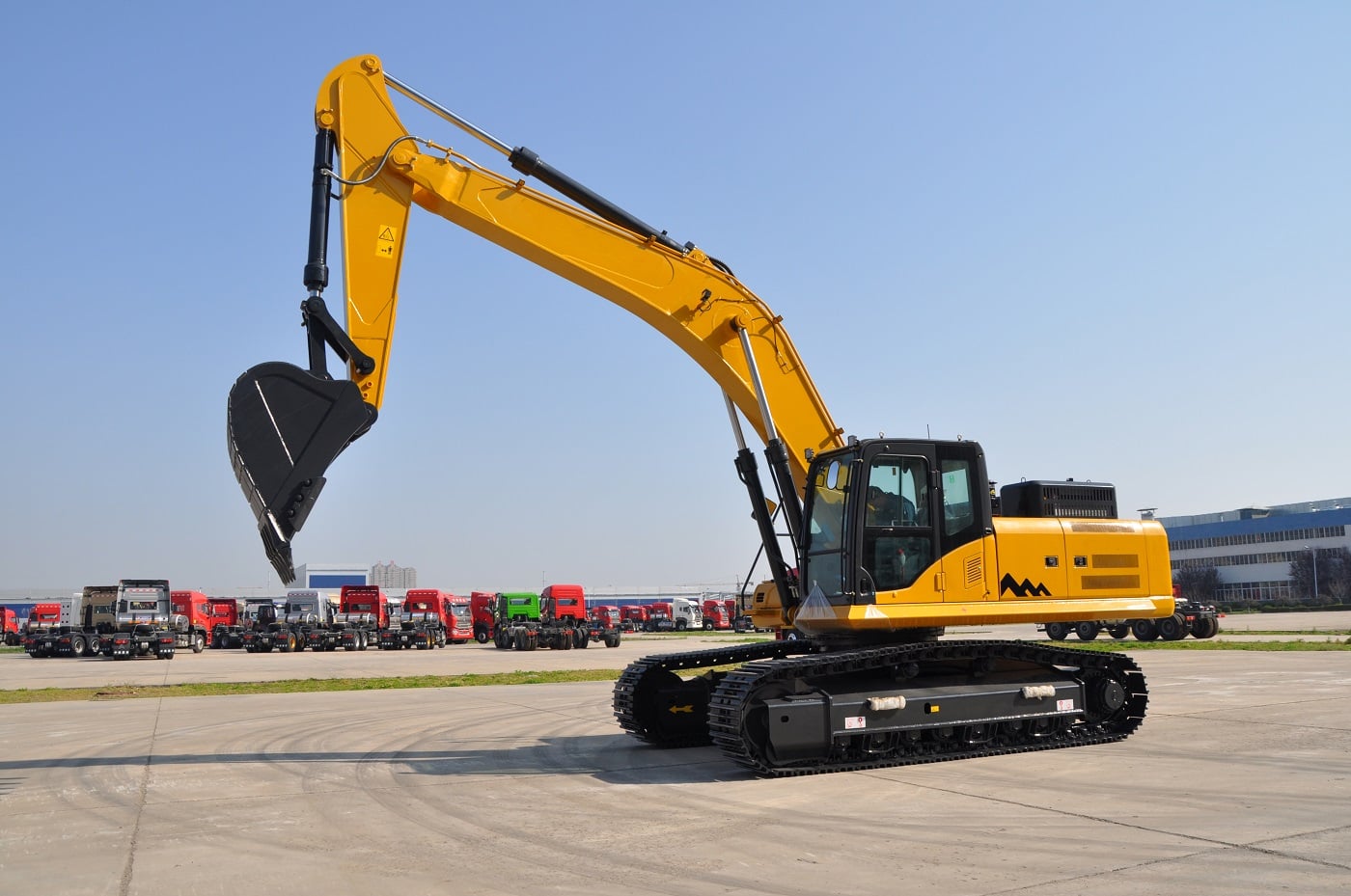
As shown in the images, the SH380-9 features a standard crawler undercarriage with a well-balanced center of gravity. This design ensures excellent traction and resistance to tipping, even on soft ground or inclines, allowing the machine to adapt to the complex terrain often found on construction sites.
2. Exterior Design and Structural Highlights
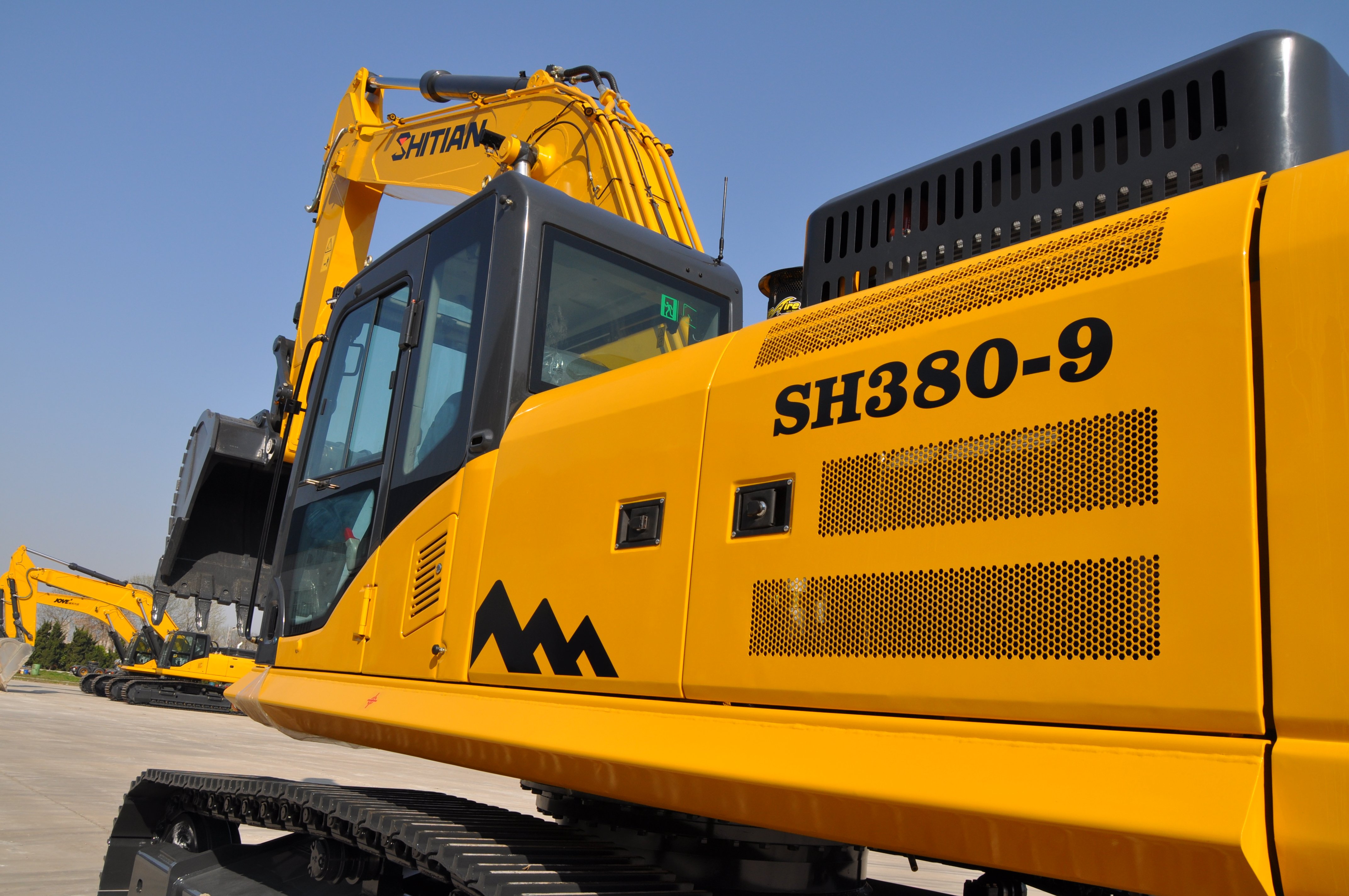
The machine is finished in a highly recognizable yellow paint scheme, with a compact layout for the cab and engine compartment. The "SH380-9" model designation is clearly marked on the side, facilitating easy identification and fleet management on-site. The boom and arm utilize a large-cross-section box structure with precise, uniform welds; critical pivot points are reinforced with additional plating, enhancing structural durability during long-term, high-frequency operation.
Hydraulic lines are neatly routed along the boom, minimizing the risk of interference during operation. The bucket is equipped with reinforced teeth and a wear-resistant base plate, ensuring superior resistance to abrasion when working in rocky or hard-packed soil conditions.
III. Operational Advantages: A Balance of Efficiency, Stability, and Control
Built on a 38-ton class platform and equipped with a high-displacement hydraulic system, the SH380-9 ensures optimal flow distribution during simultaneous, multi-function operations. The seamless transition between boom lifting and slewing movements helps shorten the cycle time for each operational task. Furthermore, the extended arm and well-balanced counterweight design increase the effective digging radius, providing greater operational flexibility for deep-pit excavation and slope grading.
The cab features expansive glazing, offering an unobstructed field of view. Combined with an ergonomically designed control layout, this helps reduce operator fatigue during long shifts. The machine demonstrates excellent stability under continuous loading conditions, making it an ideal choice for high-efficiency earthmoving operations when paired with dump trucks.
IV. Key Configuration Features and Routine Maintenance
The SH380-9 is designed with a focus on practicality and ease of maintenance. The engine compartment side doors feature large ventilation grilles, which facilitate heat dissipation during heavy-duty operations. Major filters and service points are centrally located, minimizing the need for the operator to climb onto the machine for routine maintenance and thereby reducing downtime.
The track tensioning system and track rollers are designed for easy inspection and adjustment. When combined with a disciplined lubrication schedule, these features help extend the service life of the undercarriage components. For users primarily engaged in earthmoving, it is recommended to select a bucket size appropriate for the specific soil conditions to avoid long-term overloading, which could compromise the structural integrity of the machine.
V. Selection Guidance: Choosing Between 38-Ton and 22-Ton Class Excavators
For projects involving large-scale earthmoving, mining overburden removal, or long-duration continuous operation, a 38-ton class crawler excavator offers superior output per unit of time and a larger working radius. Conversely, if the job site is confined, requires frequent relocation, or involves smaller-scale municipal projects, a 22-ton class model provides greater flexibility. The final selection should be based on a comprehensive assessment of factors such as total earthwork volume, site conditions, transport logistics, and budget constraints.
Overall, the SH380-9—a 38-ton class crawler excavator—strikes an excellent balance between structural strength, operational efficiency, and ease of maintenance, making it well-suited as a primary machine for continuous, large-scale earthmoving operations.
Recommended Products

 Hot News
-
High-Quality Mid-Sized Crawler Excavator: Precision Hydraulic Control for Export-Grade Performance
2026-11-21
-
An In-depth Look at the SH380-9 Excavator: Operational Advantages and Key Specifications of a 38-Ton Class Crawler Excavator
2026-11-21
-
Factory-Direct Export: High-Quality Crawler Bulldozers and Attachments, Shipped Directly from Chinese Ports to Africa and Southeast Asia
2026-11-21
-
A 21-Ton Class Yellow Crawler Excavator: Ready for Action—An All-Rounder for Mid-Scale Projects
2026-11-19
-
High-Performance Crawler Bulldozers Available Now – Factory-Direct Supply of Premium Construction Equipment
2026-11-19
-
SH500-9 Heavy-Duty Crawler Excavator: A Powerful Hydraulic System for Large-Scale Excavation in Harsh Conditions
2026-11-17