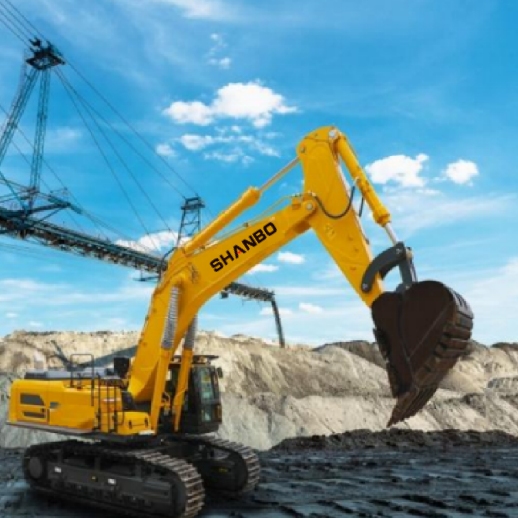
Essential Bulldozer Equipment: Components, Attachments, and Uses
Bulldozers are one of the most powerful and widely used machines in the construction industry. They are renowned for their outstanding pushing force, stability and adaptability, and are indispensable equipment for land clearance, leveling, mining and infrastructure construction.
To fully understand all the functions of these machines, it is crucial to know their core components, available accessories and wide range of applications. It is precisely these factors that make bulldozers indispensable equipment on modern construction sites.
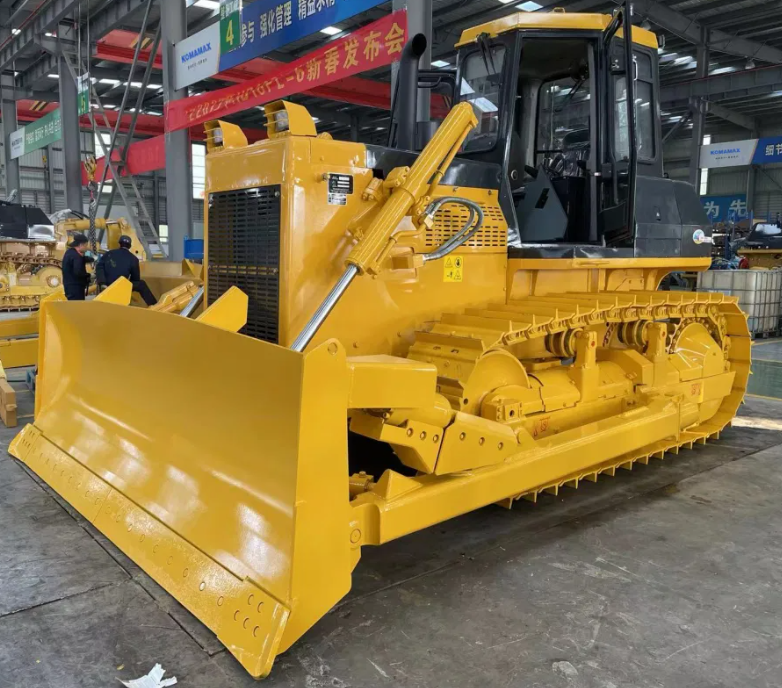
Core Components of Bulldozer Equipment
The performance of a bulldozer largely depends on its basic components. These structures and mechanical components have been meticulously designed to provide powerful performance, precise control and outstanding durability in harsh environments.
1. Engine
At the core of each bulldozer is a high-torque diesel engine specially designed for heavy-duty operations. The bulldozer engine can provide continuous power at low speeds, offering the necessary thrust to push soil, rocks or debris. Features such as turbocharging, advanced cooling systems and fuel efficiency technology ensure reliable operation even under continuous load.
2. Transmission System
Bulldozers usually adopt two main transmission systems: the hydrostatic transmission system and the powershift transmission system. The hydrostatic transmission system can provide precise control and seamless speed regulation, making it highly suitable for smooth and fine operations. The powershift transmission system is renowned for its high durability and simple shift structure, making it suitable for high-intensity applications such as mining and land clearance.
3. Undercarriage
The undercarriage is one of the components of a bulldozer that bears the greatest stress. It includes tracks, rollers, idlers, track chains, and sprockets. The sturdy undercarriage enables the bulldozer equipment to operate on uneven, muddy or rocky terrain while maintaining traction and stability. Proper chassis design and maintenance have a significant impact on the service life and operating costs of the machine.
4. Blade
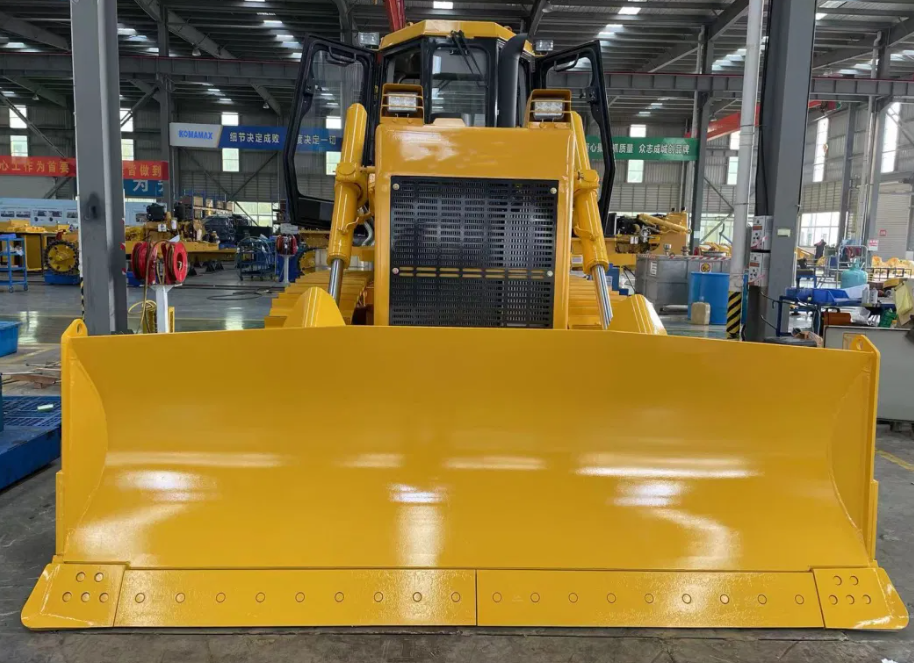
The bulldozer blade is the most easily identifiable component of a bulldozer, as it directly determines the bulldozer's earthwork operation capacity. The size, curvature and adjustability of bulldozers vary, enabling the machine to handle different materials and tasks. The movement, inclination, lifting and angle of the bulldozer blades are controlled by the hydraulic system, enabling the operator to perform precise control on site.
5. Cab and Controls
Modern bulldozers are equipped with ergonomic cabs, typically featuring climate control, sound insulation design, digital instrument panels, and advanced joysticks or control levers, providing operators with a comfortable and efficient working environment. Some advanced models also include GPs-based slope control systems, automatic bulldozer auxiliary systems and real-time performance monitoring to enhance efficiency and accuracy.
Common Bulldozer Attachments
The attachment expands the functions of the bulldozer, enabling it to perform more work than just pushing earth. By choosing the appropriate accessories, operators can adapt machines to the special tasks of various industries.
1. Bulldozer Blades
Each type of bulldozer blade is designed according to specific application conditions. The straight blade (S-blade) has a short and flat structure, making it suitable for operations that require high-precision control, such as fine leveling, soil leveling, and material spreading. The general-purpose blade (U-blade) features larger side wings and a curved profile, making it highly suitable for pushing large amounts of loose materials.
The semi-universal blade (SU-blade) not only has a certain capacity but also maintains good penetration, making it suitable for rock processing, heavy earthwork, and multi-purpose operations. The angle blade can rotate to the left or right, allowing the operator to move the material laterally. Therefore, it is often used in road construction, trench backfilling and other applications that require lateral pushing of materials.
2. Rippers
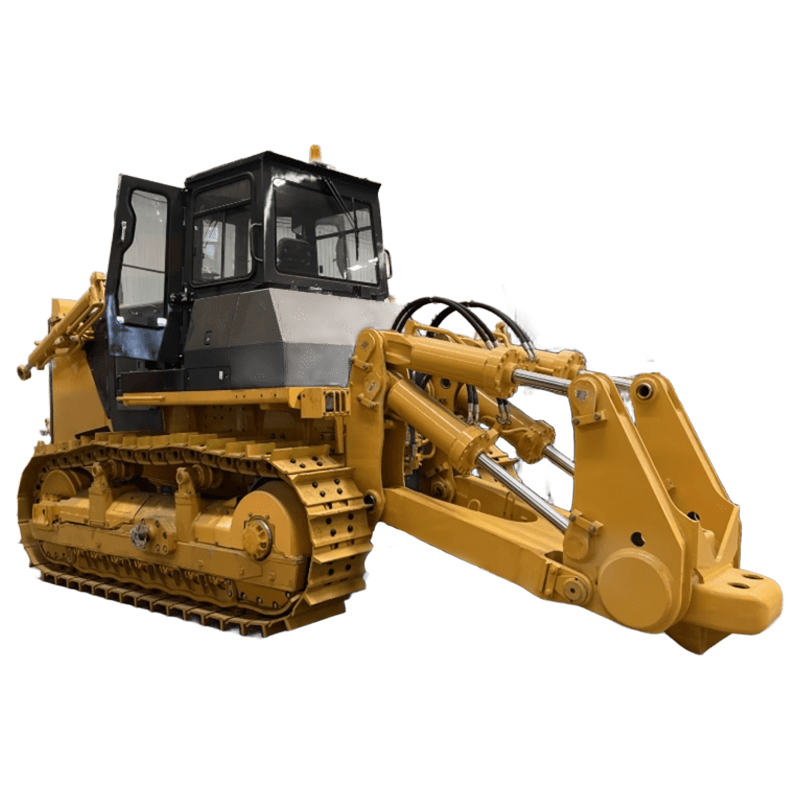
The ripper is a powerful accessory installed at the rear of a bulldozer, which can be used to break high-strength materials such as hard soil, rock, asphalt and frozen soil. Among them, the single-shank ripper is suitable for deep and high-intensity crushing operations, while the multi-shank ripper is more suitable for lighter and larger coverage soil loosening needs, enabling the bulldozer to operate efficiently under various complex ground conditions.
3. Winches
The winch is installed at the rear of the bulldozer and is an important accessory for towing, rescue and anchoring operations, capable of providing reliable support in scenarios that require strong pulling force. It is widely used in forestry, rescue operations and steep slope environments.
4. Protective Structures
To enhance safety in hazardous environments, bulldozers are usually equipped with various protective devices, such as forestry protective kits, heavy-duty protective covers, and reinforced cabs. These protective accessories can effectively resist the potential risks brought by falling objects, branches and external impacts, thereby providing operators with a higher level of safety.
Primary Uses of Bulldozers
Bulldozers are highly favored for their ability to handle the heavy workload in multiple industries. Their powerful performance, adaptability and traction make them indispensable in many large-scale operations.
1. Land Clearing and Site Preparation
Before the construction began, bulldozers were used to clear trees, shrubs, huge rocks and debris. Their strong blades and rippers can efficiently carry out cleaning and leveling, laying a solid foundation for subsequent development.
2. Grading and Earthmoving
Bulldozers are widely used to shape terrain, create slopes and level the ground. With the help of GPS guidance systems, operators can carry out precise leveling operations on roads, building foundations and infrastructure projects.
3. Mining and Quarrying
In mining environments, bulldozers are mainly used for stripping topsoil, building and maintaining roads in mining areas, and managing material piles. Their outstanding durability and powerful pushing capacity enable them to operate continuously under high-intensity working conditions.
4. Road Construction
Bulldozers play a crucial role in road construction and are often used for basic operations such as roadbed preparation, aggregate laying, and ditch backfilling. Adjustable-angle bulldozers are particularly effective for trimming shoulders and ditches.
5. Forestry Applications
Forestry bulldozers equipped with special protective devices can operate safely and efficiently in high-risk forestry operation environments. They are mainly used for tasks such as clearing logging channels, managing logging residue piles, transporting logs, and building fire isolation belts.
6. Disaster Response
During natural disasters such as floods, forest fires or earthquakes, bulldozers are crucial for clearing debris, opening up emergency passages and stabilizing damaged areas.
Conclusion
Bulldozers are indispensable mechanical equipment in the fields of construction, mining, forestry, and civil engineering. Their powerful performance, reliability, and adaptability stem from the combination of various key components and dedicated accessories. By understanding these elements, the engine system, undercarriage, blade, ripper, winch, etc., you can make informed decisions to maximize productivity at the construction site.
Whether it is land preparation, breaking down hard surfaces, or shaping terrain according to precise specifications, bulldozers have always been one of the most important devices in this industry.
 Hot News
-
Shantui BL75 Backhoe Loader – Special Clearance Sale: Versatile "All-in-One" Construction Machine Available Now
2026-10-15
-
Shanbo SH380 Crawler-Type Heavy-Duty Mining Excavator – Powered by Cummins for Stable, High-Performance Output
2026-10-15
-
SHANBO EW50 Electric Loader Launched: Dual-Gun Fast Charging & Long Range
2026-10-15
-
Introduction to the Backhoe Loader: What Is It? An Overview of the Multifunctional Machine
2026-10-06
-
Operational Scenarios and Applications for the 38-Ton Excavator | SHANBO Large Excavator for Mining and Infrastructure Construction
2026-10-06
-
SHANBO EW30 Electric Loader – 3-Ton Lithium-Powered Wheel Loader – Zero-Emission Loader for Mines and Construction Sites
2026-09-24